abstraction | exploration | variation
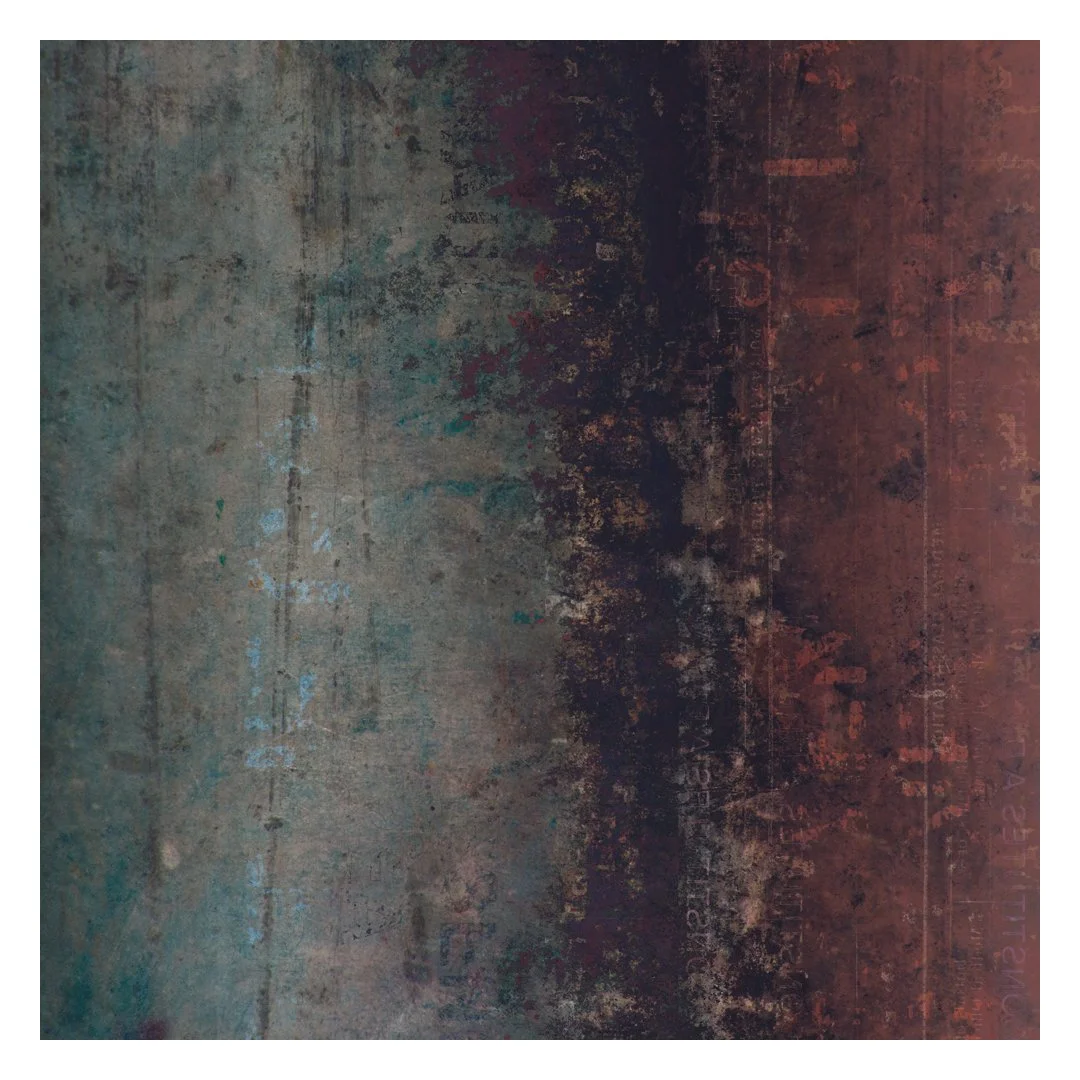
There is beauty to be found in decay, in the damage wrought by time, the result of neglect and the accumulated wear and tear of daily use. Scratches, scuffs, peeling paint, stains and spills, aging concrete and rusting metals, labels and signs eroded and overwritten, only partially legible. The overlooked visual textures of the built environment, urban or industrial. Unconsidered details passed by, unnoticed at all by most, overlooked in favour of the brighter, glossier attractions that compete constantly for our attention. But take the time to look with purpose, with a scavenger’s eye, and a riot of textures can be found all around – both inspiration and raw material, waiting to be gathered and used.
Some details snag the eye immediately – strong contrasting marks that promise interesting compositional structures. Others need searching out, slow looking and contemplation revealing subtler textures, the details that add depth to the finished work. It’s hard to define exactly what it is that catches the attention, but I know it when I see it.
Each piece starts from the collision of multiple source images, each eroding the others in a form of visual attrition, before building something new from the remains. The final images are usually developed in sequences, each linked by a common set of source material or thematic ideas. Their evolution is intuitive and exploratory, iterating around processes that have generated interesting ideas, sometimes converging on a single image, other times diverging into multiple variations. The digital workflow allows for endless revision – nothing is final, everything open to change until committed to a physical print, maybe not even then. Self-imposed rules restrict the options available – a system to shape the chaos.